
Hair ·
Hair Transplantation FUE vs DHI: Understanding the Differences
FUE describes how follicles are extracted; DHI describes how they are implanted. How the two approaches differ, and why the plan matters more than the label.
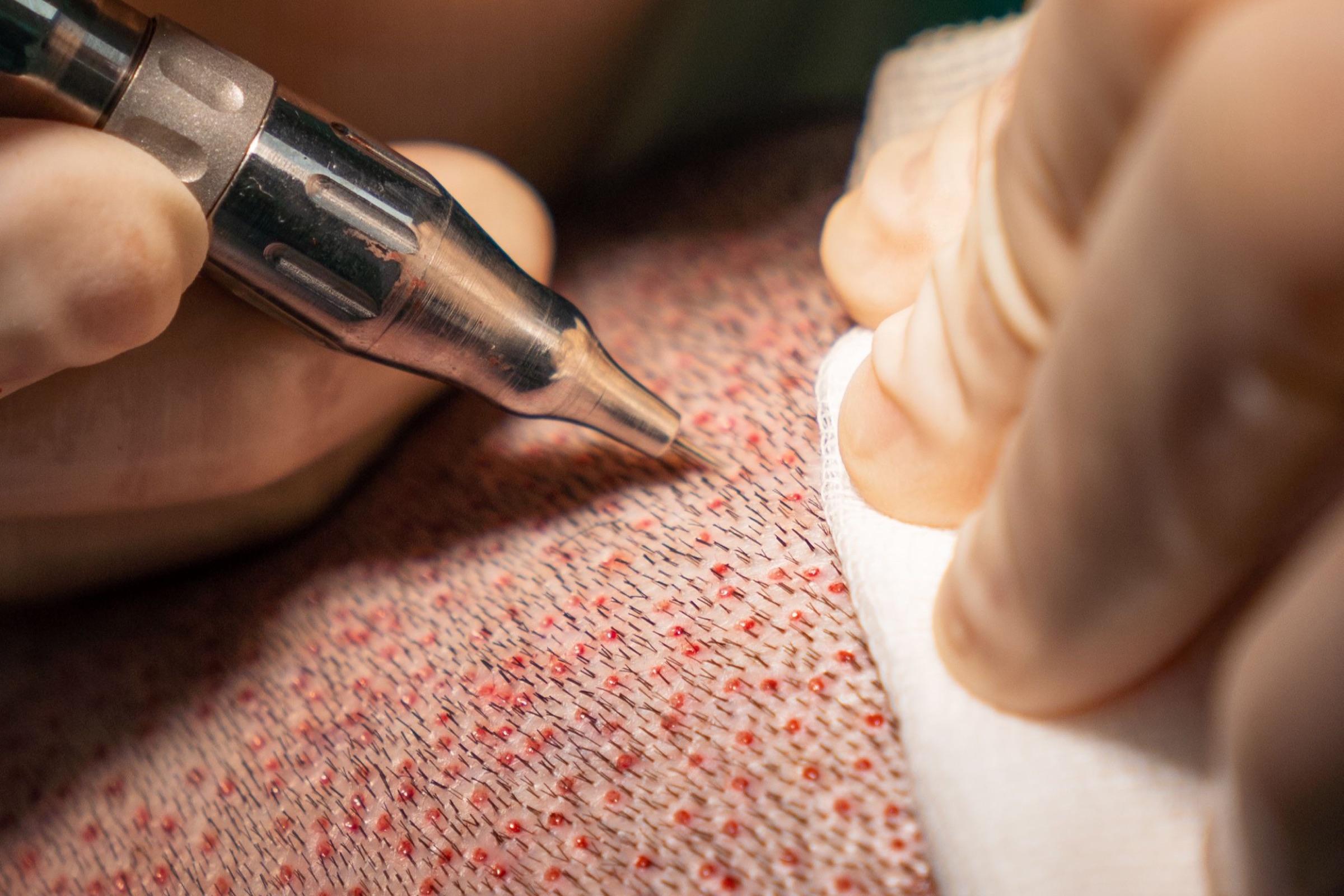
Hair Transplantation FUE vs DHI is a common topic for people considering surgical hair restoration. Both approaches involve transferring hair follicles from a donor area to areas affected by hair loss. The main difference lies in how the recipient sites are created and how the follicles are implanted. Neither method is universally suitable for every patient; the choice depends on individual anatomy, hair loss characteristics and surgical planning.
What Is FUE Hair Transplantation?
Follicular Unit Extraction (FUE) is a hair transplantation technique in which individual follicular units are removed from the donor area, usually at the back or sides of the scalp.
The extracted grafts are then prepared and placed into the recipient area. Depending on the surgical plan, small recipient sites may be created before implantation. These sites help determine the direction, angle and distribution of the transplanted follicles.
FUE describes the method of extracting follicular units. It does not, by itself, define every stage of the implantation process.
What Is DHI Hair Transplantation?
Direct Hair Implantation (DHI) generally refers to an implantation approach using a specialised implanter device. After follicular units are extracted and prepared, they are loaded into the device and implanted into the recipient area.
In many DHI procedures, the implanter creates the recipient opening and places the graft during the same movement. The technique requires careful handling of the grafts and appropriate control of implantation depth, angle and direction.
The term DHI is used in different ways across the hair restoration industry. Patients should therefore ask the clinic to explain exactly how extraction, site creation and implantation will be performed.
Hair Transplantation FUE vs DHI: What Are the Main Differences?
The most important distinction is not simply the instrument used. It is the overall surgical workflow and how the recipient area is planned.
Recipient-site creation: In conventional FUE workflows, recipient sites are commonly created before graft placement. In DHI workflows, an implanter may be used to create the opening and place the graft in one step.
Implantation process: DHI uses an implanter device, while FUE can be followed by different implantation methods. FUE and DHI are therefore not always directly comparable categories: FUE primarily describes extraction, whereas DHI describes an implantation approach.
Surgical planning: Both approaches require assessment of donor capacity, hair characteristics, recipient-area dimensions and the intended hairline.
Graft handling: Both techniques require careful extraction, storage and implantation. Graft survival depends on multiple factors, including tissue handling, time outside the body and surgical technique. The name of the method alone does not establish a particular survival rate.
Which Technique Is Better for Natural-Looking Results?
A natural-looking result depends on more than the technique label. Hairline design, graft distribution, follicular-unit selection, implantation angle and direction all contribute to the final appearance.
The surgeon must also consider the patient’s existing hair, future hair loss and available donor supply. An aggressive hairline or excessive use of grafts in one area may reduce options for future treatment.
Neither FUE nor DHI should be presented as automatically producing a more natural result. The suitability of each approach must be assessed individually.
Recovery After FUE and DHI
Recovery varies according to the extent of the procedure, the patient’s healing characteristics and the post-operative care plan.
Temporary redness, swelling, tenderness, crusting and sensitivity may occur. Patients should follow the clinic’s washing instructions and avoid activities that could disturb the recipient or donor areas during the initial healing period.
The transplanted hairs commonly shed during the early post-operative period. This does not necessarily mean that the follicles have been lost. New growth develops gradually, and the visible result takes time to mature.
Risks and Limitations
Both approaches involve surgical risks. These may include bleeding, infection, scarring, temporary or persistent changes in sensation, folliculitis, uneven growth and an unnatural appearance.
The donor area is finite. Removing too many follicular units can lead to visible thinning or an irregular appearance. Patients should understand the limitations of their donor supply before consenting to treatment.
Who May Be Suitable for FUE or DHI?
Suitability depends on the cause and pattern of hair loss, donor-area density, scalp condition, general health and expectations. A clinical assessment is necessary before selecting a technique.
Conclusion
Hair Transplantation FUE vs DHI should be understood as a comparison of different stages and approaches within hair restoration, rather than a simple choice between two universally competing procedures. The appropriate method depends on the patient’s individual characteristics and a carefully developed surgical plan. A consultation with a qualified physician is essential to discuss suitability, limitations and potential risks.
Consultation
Request a consultation
Contact the clinic to request a consult or an offer.
Renewa ClinicSuadiye, Emin Ali Paşa Cd. No:43, 34740 Kadıköy/İstanbul
Private ClinicSuadiye, Bağdat Cad. No:429/5, 34740 Kadıköy/İstanbul, Türkiye
HoursWeekdays 09:00–17:00Saturday 09:00–14:00