
Hair ·
Hair transplantation
Hair transplantation is the gold-standard and most effective method for the treatment of male hair loss. The most common cause is androgenetic alopecia, which often begins in the early 20s, typically has a family history, and progresses gradually until the late 40s.
Written by Prof. Dr. Oğuz Kayıran, Plastic, Reconstructive and Aesthetic Surgeon · View profile
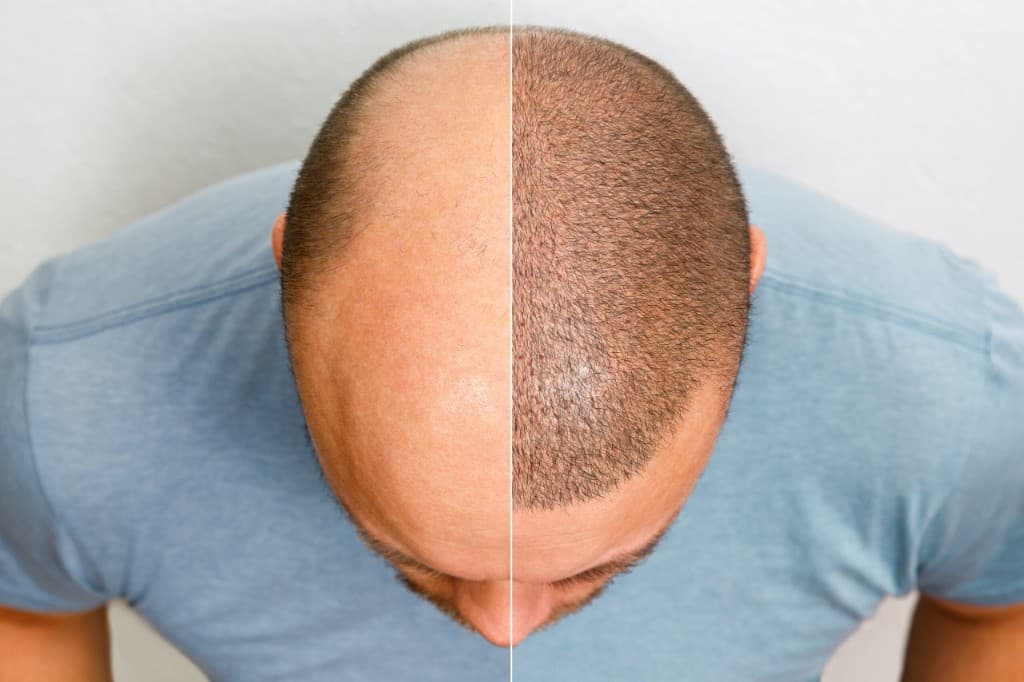
Hair transplantation is the gold-standard and most effective method for the treatment of male hair loss. The most common cause is androgenetic alopecia, which often begins in the early 20s, typically has a family history, and progresses gradually until the late 40s. Treatment options for hair loss can be grouped into two categories: 1) medical treatment and 2) surgical treatment. Among surgical options, hair transplantation remains the most successful, reliable, predictable, and natural-appearing solution when performed by experienced hands, providing permanent hair restoration and highly satisfactory results in suitable candidates.
Who are candidates for hair transplantation?
Patients are considered suitable candidates for hair transplantation when they have a stable pattern of androgenetic alopecia, sufficient donor hair density, good general health, a healthy scalp, realistic expectations, and psychological readiness for surgery. These factors are critical to achieving natural hair transplant results.
Who are not suitable for hair transplantation?
Hair transplantation is generally not recommended in cases of active or unstable hair loss conditions such as alopecia areata or telogen effluvium, inadequate donor supply, uncontrolled systemic diseases, active scalp infection or inflammation, or a tendency toward keloid scarring. It is also avoided in heavy smokers, individuals with substance abuse, unrealistic expectations, or psychological instability. Patients using anticoagulants or immunomodulatory medications require proper medical optimization, and hair transplantation should be postponed during pregnancy, breastfeeding, or following recent chemotherapy or radiation-related scalp damage.
Planning and natural hairline design
A natural front hairline design in male hair transplantation should respect the patient’s age, facial proportions, and existing hair pattern rather than creating an unnaturally low or straight line. The hairline should have a soft, irregular outline with micro- and macro-zigzag variations. The transition zone is built using single-hair grafts placed at lower density (15-30 grafts/cm2), while density is gradually increased posteriorly using two- and three-hair grafts (30-40 grafts/cm2) to create a natural gradient. The temporal angles should be age-appropriate so that the result remains natural and harmonious over time.
How is hair transplantation performed?
Hair transplantation is usually performed under local anesthesia, with sedation if needed. The technique is selected based on the patient’s suitability – including Follicular Unit Extraction (FUE), Direct Hair Implantation (DHI), or long-hair transplantation methods. Hair follicles genetically resistant to shedding are harvested from the donor area on the back of the head and meticulously implanted into the recipient area. The quantity, quality, and density of the donor area are the main determinants of success. Additional factors include hair shaft thickness, the number of hairs per follicle, and recipient site characteristics.
What should you expect after hair transplantation?
Successful hair transplantation outcomes depend greatly on adherence to postoperative instructions. In the first 10 days, the scalp is gently cleaned, antibiotic ointment is applied to the donor area, and the first hair wash is performed within 24-48 hours. Patients should sleep on their backs and avoid pressure on the grafts. After day 10, normal social activity can gradually resume, while strenuous exercise should be avoided until week 4 and sun exposure minimized for 8 weeks. Minoxidil and supportive medical therapies may be introduced from week 3. Initial shedding commonly begins after the second week, early regrowth appears around month 3, approximately 50% coverage is seen by month 6, and final natural hair transplant results are typically achieved within 12 months.
Consultation
Request a consultation
Contact the clinic to request a consult or an offer.
AddressSuadiye, Emin Ali Paşa Cd. No:43, 34740 Kadıköy/İstanbul
HoursWeekdays 09:00–17:00Saturday 09:00–14:00